
There is a particular kind of energy that takes over when a team decides to stop waiting for permission and just start building. Meetings get skipped. Documentation gets ignored. Tickets get bypassed. Someone has an idea in the morning, and by afternoon there is working code. It feels like momentum. It feels like what software development was supposed to feel like before process crushed all the joy out of it. And for a while, it actually works.
This phase is not imaginary. Real products ship this way. Early users do not care whether the architecture is elegant or whether every decision was documented. They care that something exists and mostly does what they need. When the team is small enough that everyone fits in a single room or a single chat thread, shared understanding replaces formal structure. Nobody needs rules when everyone already knows what everyone else is thinking. The vibes carry the work forward, and the work gets done faster than any process-heavy team would believe possible.
But something shifts. Not all at once, and not with a dramatic failure. The shift is quiet and cumulative. And understanding why it happens matters for anyone who wants to build something that lasts longer than the initial burst of enthusiasm.
The Moment "We Will Figure It Out Later" Stops Being a Plan
Early in a project, deferring decisions is often the right call. Spending time perfecting a structure that might need to change next week is wasteful. Making quick choices and moving forward keeps momentum alive. The problem is not the deferral. The problem is that later has a way of quietly becoming never.
Features keep shipping. The product keeps growing. But the foundational conversations about how things should work never quite happen. One endpoint behaves one way because it was written during a late-night push before a demo. Another endpoint behaves differently because someone refactored it on a quiet Friday when they finally had time to think. Both choices made perfect sense in their moment. Nobody documented either one. Nobody aligned them. The system drifts, not because anyone made a bad decision, but because nobody ever said "this is how we do this here."
What makes this particularly tricky is that nothing looks broken from the outside. The product works. Users are happy. The drift is invisible to everyone except the people trying to build on top of it. And even they might not notice it consciously. They just feel that working in the codebase has gotten harder without being able to point to exactly why.
What Actually Happens When Someone New Joins
The clearest signal that vibe-first development has run its course arrives when the team grows. A new developer joins. They are smart and capable and eager to contribute. They open the codebase and start exploring, expecting to find patterns they can learn and follow. Instead, they find something that looks like it was built by several different teams who never spoke to each other.
Business logic lives in three different places because three different people solved the same problem three different ways. Some validation happens in the frontend because it was faster at the time. Some rules exist only as comments because someone meant to implement them properly later. The tests that exist describe what the code currently does, not what it was intended to do. There is no single source of truth about how anything should behave.
The new developer starts asking questions. They get answers like "yeah, that part is a bit strange" or "we usually try not to touch that unless we absolutely have to." They learn which parts of the system are haunted and which are safe. But this knowledge lives only in the heads of the people who have been there long enough to accumulate it. The new person slows down. Not because they are less capable, but because the system does nothing to help them understand itself. Speed continues, but only for the people who were there from the start.
The Real Problem Is Not Technical Debt
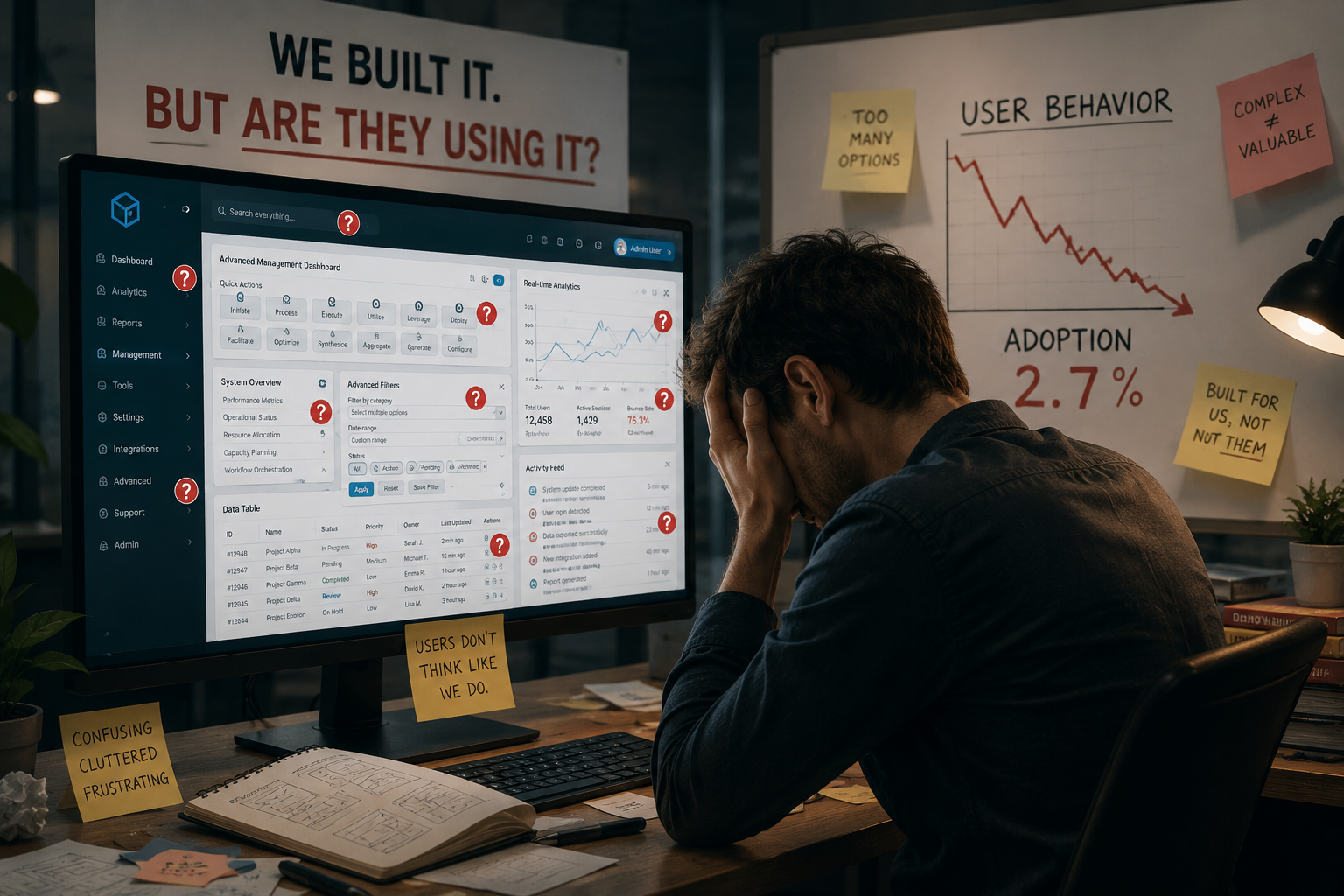
When teams reach this point, the conversation often turns to technical debt. Everyone agrees that debt has accumulated and needs to be addressed. But framing the problem as debt misses something important. Debt can be managed. Debt can be paid down when everyone agrees on what good looks like and is willing to allocate time to achieve it.
The deeper problem is ambiguity. When there are no shared constraints, every cleanup attempt becomes a negotiation. One person's obvious improvement is another person's unnecessary churn. Without agreed-upon patterns, there is no way to distinguish between refactoring that moves the system toward coherence and refactoring that just replaces one arbitrary choice with another. Nothing is clearly wrong enough to justify fixing, so nothing gets fixed. Temporary decisions become permanent fixtures because removing them would require a conversation nobody knows how to start.
This is how systems end up layered with choices that were meant to last a week and instead last for years. Everyone knows they should be addressed. Nobody wants to be the person who breaks something that was never clearly defined in the first place. The ambiguity protects the status quo.
When Nobody Knows Who Owns What
Another quiet erosion happens around ownership. In the early vibes-driven phase, ownership feels like an unnecessary formality. People touch whatever they need to touch to get features out. This flexibility is genuinely useful when the system is small and the team is tight. Everyone understands the tradeoffs because everyone is making them together.
As the system grows, this flexibility becomes a liability. When something breaks in production, the first question is not "how do we fix this" but "who understands this part well enough to even start." Not because anyone is avoiding responsibility, but because responsibility was never clearly assigned. Logic is distributed across services and files with boundaries that exist only in the memories of long-tenured team members. Every incident begins with archaeology. Understanding comes before action, and understanding takes time the team does not have.
On-call rotations become stressful for reasons that have nothing to do with the frequency of incidents. Even a quiet week carries the background anxiety of not knowing whether you will be able to figure things out when something eventually goes wrong. The system does not support the people supporting it.
The Exhaustion That Comes From Carrying Too Much Context
This is where the collapse usually begins. Not with a spectacular outage or a mass resignation, but with people slowly getting tired in ways they cannot quite name. Developers burn out not only from working too many hours. They burn out from the cognitive weight of needing deep context for even small changes. When nothing is obvious. When the safest path forward is always to ask someone who was there when that part was written. When the system demands that you hold it together through sheer memory and will.
The team stops supporting the system and starts being supported by a few key people. Progress depends on the availability of those who "just know how it works." When they take vacation, work slows. When they are in back-to-back meetings, work slows. When they eventually leave for something new, work stops entirely while everyone else tries to reconstruct what was only ever stored in one person's head. That is not resilience. That is fragility wearing a friendly face.
Why Constraints Actually Protect Creativity
The natural reaction to all of this is to assume that the answer is more process. More rules. More documentation. More meetings to decide how things should be done. But that reaction misses what made the early phase work so well in the first place. The energy and speed came from freedom. The mistake is thinking that freedom and constraints are opposites.
Good teams do not eliminate freedom. They decide where freedom matters and where it does not. They agree on patterns not to restrict creativity but to reduce the cognitive load of reinventing basic structures for every new feature. They define ownership not to create bureaucracy but to make it clear who can answer questions when something goes wrong. They document decisions not because documentation is inherently valuable but because shared memory degrades as teams grow and change.
These constraints create space for intuition to operate safely. When the basics are settled, mental energy can focus on the parts of the problem that actually require creativity. New team members can contribute faster because the system tells them how things work instead of requiring them to discover it through trial and error. The irony is that the teams that sustain speed over years usually have more rules than the teams that burn out after months. They just have rules that serve the people doing the work rather than rules that serve the idea of process.
What Actually Lasts
Vibe-first development collapses because software eventually outgrows the memory of any single person. What works when everyone fits in a room and shares every conversation stops working when the system becomes larger than what anyone can hold in their head. Freedom without agreed-upon constraints slowly becomes inconsistency. Inconsistency becomes risk. Risk becomes the background exhaustion of never quite knowing whether a change will break something unexpected.
Vibes can start momentum. They cannot sustain it through team growth and time and the natural churn of people moving on to new opportunities. The teams that last are the ones that recognize when it is time to stop improvising and start deciding. Not deciding everything. Not eliminating flexibility. Just deciding enough that the system can support the people working on it instead of demanding that they support it through sheer force of memory and will. That shift is not the end of creativity. It is what makes sustained creativity possible.






Comments (0)
No comments yet
Be the first to share your thoughts!
Post Your Comment Here: