

Monitoring dashboards have a peculiar way of staying green while users are actively experiencing failure. The metrics that engineering teams track, request latency, error rates, CPU utilization, memory consumption, remain stubbornly normal even as support tickets accumulate and social media fills with complaints. This disconnect between observed system health and actual user experience is not a monitoring failure in the conventional sense. The tools are working exactly as configured. They are simply configured to measure the wrong things, or more precisely, they are configured to measure things that are easy to measure rather than things that actually predict user pain.
The gap between dashboard green and user frustration emerges from a set of failure modes that traditional monitoring was never designed to detect. These failures do not produce spikes in error rate because they are not errors in the HTTP sense. They do not increase latency percentiles because the slow parts happen after the request has already returned a success response. They do not trigger CPU alerts because the problem is not computational load but incomplete or inconsistent state. Understanding why monitoring misses these failures requires examining three specific categories: logging gaps that create blind spots in system behavior, async failures that occur outside the request-response cycle, and partial errors that succeed enough to return a 200 status while failing enough to break the user experience.
Logging Gaps: What You Do Not Record Cannot Be Investigated
Logging is often treated as an implementation detail rather than a first-class observability concern. Developers add log statements where it seems useful during initial development, then rarely revisit those decisions as the system evolves. The result is a logging surface that captures what was interesting during the first few weeks of a service's existence and misses everything that became interesting later. Critical state transitions go unrecorded. Error paths that were added after launch lack instrumentation. Recovery attempts that fail silently leave no trace. When incidents occur, engineers discover that the information needed to understand what happened was never being collected.
The structural problem with logging is that it requires predicting what will matter before knowing what will break. Most systems log success paths adequately because those are the paths developers spend the most time with during implementation. They log explicit error returns because those are obvious instrumentation points. What they do not log, and what consistently matters most during incidents, are the subtle state changes that precede visible failure. A connection pool approaching exhaustion but not yet empty. A cache that is serving stale data because invalidation messages were dropped. A retry budget that is being consumed faster than anticipated. A circuit breaker that is half-open and letting through just enough traffic to look functional while failing most requests silently. None of these conditions generate log entries unless someone specifically instrumented them, and most teams never do.
The monitoring consequence of logging gaps is straightforward. When an incident occurs, the investigation stalls at the boundary of what was recorded. Engineers know that something happened between the last successful log entry and the first error, but they cannot see what it was. They are forced to reconstruct events from inference and assumption rather than evidence. The postmortem fills with phrases like "we believe" and "the likely sequence" because certainty was never captured. Each incident that exposes a logging gap typically results in adding instrumentation for that specific scenario. But the next incident will expose a different gap, and the cycle repeats indefinitely because logging is treated as reactive rather than structural.
The fix is not simply logging more. Unbounded logging creates cost and performance problems of its own. The fix is logging with intentionality about what signals matter for understanding system behavior over time. State transitions at system boundaries. Degraded modes and the conditions that trigger them. Recovery attempts and their outcomes. Decisions made by control loops and the inputs that informed them. This instrumentation is not about recording what the code did. It is about recording what the system understood about its own state at moments when that understanding changed. Without this intentional approach, logs remain a partial and often misleading record of system behavior.
Async Failures: The Errors That Happen After Success
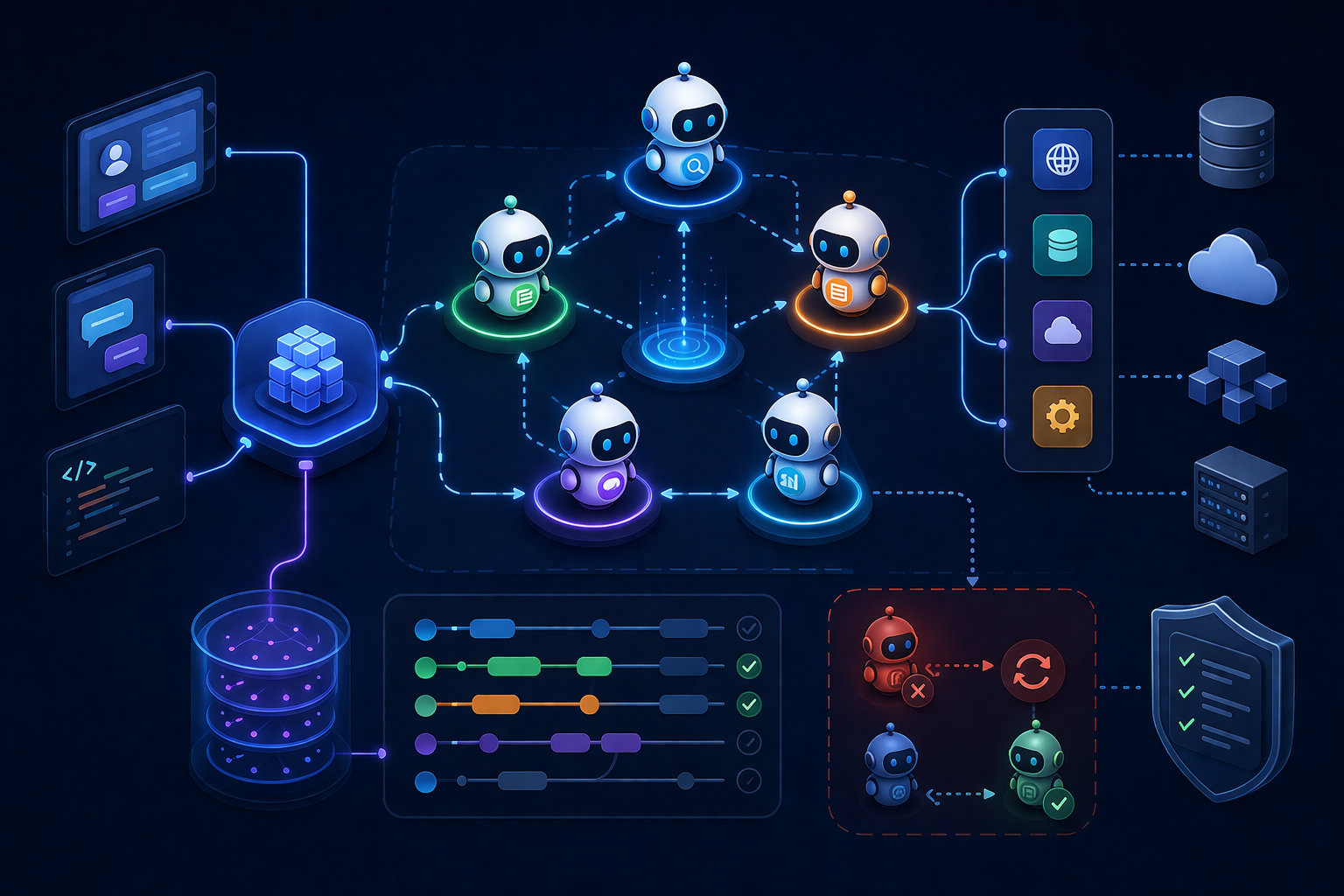
Modern distributed systems rely heavily on asynchronous processing. Messages are queued for later handling. Events are emitted and consumed by separate services. Background jobs process work that cannot complete within the request window. This architecture improves responsiveness and decouples components, but it creates a monitoring blind spot that traditional HTTP-centric observability cannot see. A request can succeed from the perspective of the synchronous response while the asynchronous work it initiated fails silently minutes or hours later.
Consider a common pattern. A user submits a form. The application validates the input, writes the data to a primary database, enqueues a message for downstream processing, and returns a 200 success response to the user. From the perspective of request monitoring, this interaction was successful. Latency was acceptable. No errors were returned. The dashboard remains green. But the message sits in the queue and eventually fails. Perhaps the consumer service is misconfigured. Perhaps the message payload is malformed in ways the producer did not validate. Perhaps a downstream dependency is unavailable and retries are exhausted. The failure is real, but it is invisible to the monitoring that measures request success.
The user eventually notices. The confirmation email never arrives. The report that was supposed to generate remains pending. The data that should have propagated to other systems stays stuck in its original location. The user contacts support. Support contacts engineering. Engineering checks the dashboards and finds nothing wrong. The investigation begins not because monitoring detected a problem but because users reported one. This pattern repeats across organizations because async observability requires different instrumentation than synchronous observability, and most teams never fully instrument their async workflows.
Effective async monitoring requires tracking the complete lifecycle of asynchronous work. Not just whether the message was enqueued, but whether it was processed, whether processing succeeded, how long it waited before processing began, and what happened when processing failed. This requires propagating trace context across async boundaries so that the user request that initiated the work can be connected to the eventual outcome. It requires monitoring queue depths not as a single aggregate but broken down by age, so that messages stuck for hours are visible even if the overall queue size remains stable. It requires alerting on processing failure rates separately from request error rates. Without these capabilities, async systems operate with large and growing blind spots that monitoring tools cannot illuminate.
Partial Errors: When Success and Failure Coexist
The most insidious monitoring gap emerges from partial errors, scenarios where an operation succeeds enough to return a success status while failing enough to degrade the user experience. A page loads but key content is missing. An API returns 200 but the response body contains error messages for specific fields. A search completes but omitted results because one of several backing indexes timed out. A checkout flow advances but a downstream tax calculation service returned a fallback value rather than an accurate computation. In each case, traditional monitoring sees success. The user sees failure.
Partial errors are common in systems that depend on multiple downstream services or data sources. The application aggregates information from several backends. When one backend fails or times out, the application faces a choice. Fail the entire request and return an error to the user, or succeed with degraded results and hope the degradation is acceptable. Most applications choose the latter because it preserves partial functionality. But that choice creates an observability gap. The request succeeded as far as HTTP status codes are concerned. The monitoring dashboard shows normal error rates. The degradation is invisible unless someone specifically instrumented it.
Over time, partial errors accumulate and normalize. Users learn that certain pages sometimes load incompletely and refreshing usually fixes it. They develop workarounds without reporting issues because the behavior becomes expected background noise. The organization loses visibility into how often these degradations occur and how severely they affect user experience. Meanwhile, the underlying reliability problems that cause the partial errors remain unfixed because they never trigger alerts. The system slowly decays while monitoring insists everything is fine.
Addressing partial errors requires instrumenting not just success and failure but the spectrum between them. Each degraded response should be counted and categorized. The reason for degradation, timeout from service A, fallback from service B, partial results from index C, should be recorded and made visible in dashboards and alerts. Service level objectives should account for degradation, not just outright failure. A request that returns partial results should count differently against reliability targets than a request that returns complete results. This instrumentation is more work than simply checking HTTP status codes, which is why it is often skipped. But skipping it means accepting that monitoring will continue missing a significant category of user pain.
Why Dashboards Stay Green While Users Suffer
The common thread across logging gaps, async failures, and partial errors is that traditional monitoring was designed for simpler systems with clearer failure boundaries. It assumes that success and failure are binary states clearly indicated by response codes. It assumes that what matters happens within the request-response cycle. It assumes that what developers thought to log during initial implementation will remain sufficient as the system evolves. In modern distributed systems, none of these assumptions hold.
Closing these monitoring gaps requires shifting from measuring what is easy to measure toward measuring what actually predicts user experience. This means instrumenting state transitions, not just request outcomes. It means tracking async workflows across their complete lifecycle. It means counting degradations alongside failures. It means treating logging as a first-class observability concern that evolves alongside the system rather than as a one-time implementation detail. None of this is technically complex. All of it requires discipline and intentionality that many teams, pressed by feature deadlines and operational demands, struggle to maintain.
The dashboards stay green because green is defined by metrics that do not capture the full reality of system health. Fixing that requires expanding the definition of what gets measured and, more importantly, what gets alerted on. Until then, monitoring tools will continue missing the real problems, not because the tools are inadequate, but because the scope of what they are asked to monitor is incomplete.




Comments (0)
No comments yet
Be the first to share your thoughts!
Post Your Comment Here: