
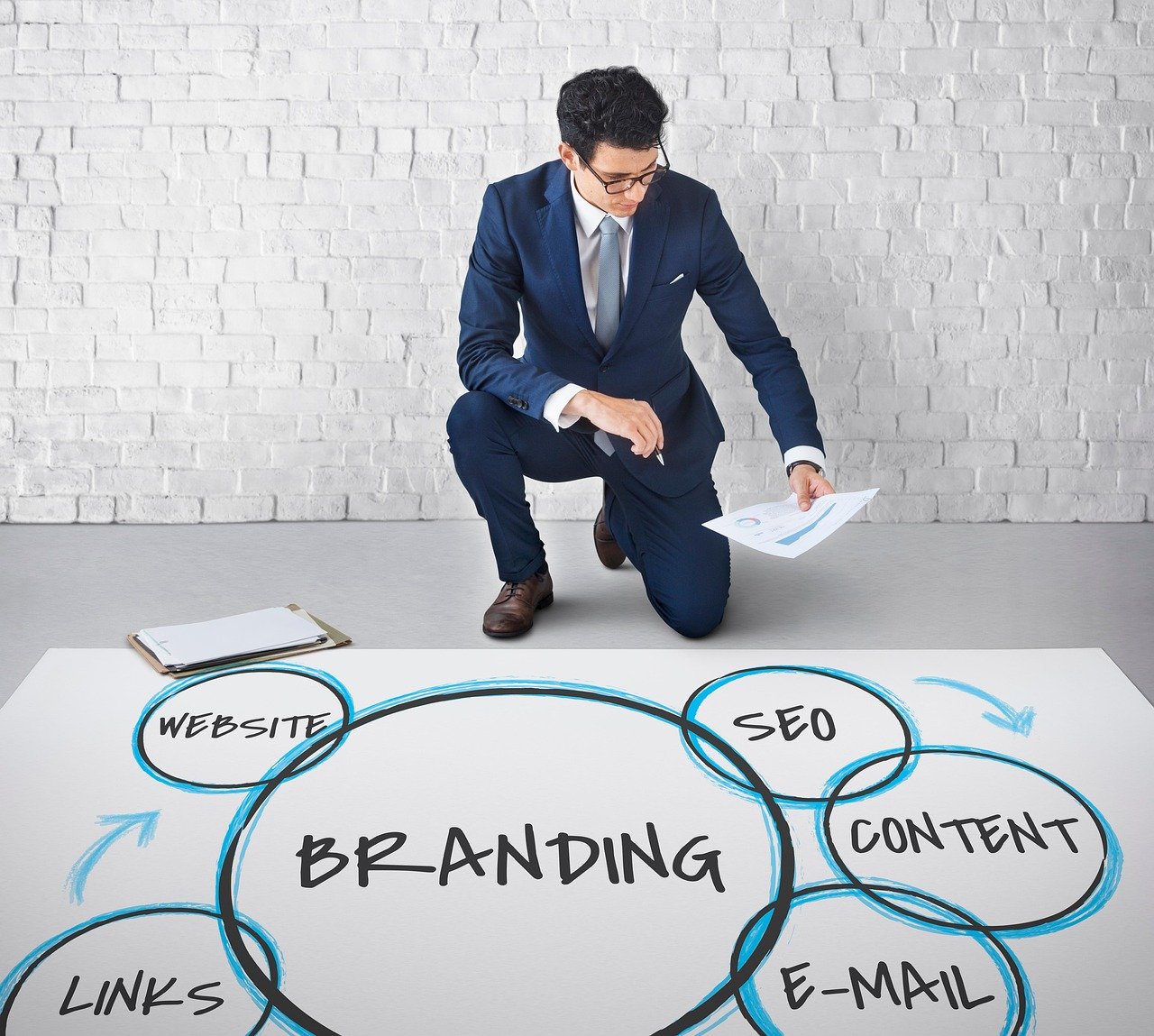
I watched two SaaS companies go head-to-head in the same market last year. Same features. Same pricing. Same target audience. One grew by forty percent. The other flatlined. The difference was not in the product or the sales team or the marketing budget. The difference was that customers trusted one of them and felt uncertain about the other. That trust did not come from a better feature set. It came from branding that was consistent and clear and professional at every touchpoint. The other company had a great product wrapped in visual chaos, and the market treated them accordingly.
Branding gets dismissed as surface-level decoration by people who do not understand what it actually does. They think it is about logos and color palettes and whether the font looks modern enough. That misunderstanding is expensive. It leads businesses to invest heavily in product development while starving the very thing that determines whether anyone will give that product a chance in the first place. Branding is not what your business looks like. It is what your business feels like to the people you are asking to trust you with their money and their time and their attention. Get that wrong, and everything else gets harder. Every sale requires more effort. Every marketing dollar does less work. Every customer takes longer to convert and leaves faster when something goes wrong.
What Branding Actually Is
Branding is not your logo. It is not your color palette or your typography or your brand guidelines document. Those are artifacts of branding. They are the visible output. Branding itself is the cumulative effect of every interaction a customer has with your business, filtered through the consistency and clarity of those interactions over time. A customer who visits your website and reads your emails and calls your support line and sees your social posts is not having separate experiences. They are building a single impression of what your business represents and whether it can be trusted.
When those interactions align, the impression strengthens. The customer feels like they understand who you are and what you stand for. They do not have to think about it consciously. They just know. When those interactions conflict, the impression weakens. The customer feels something is off without being able to articulate why. They hesitate. They compare. They stall. The gap between a coherent brand and an incoherent one shows up in conversion rates and retention curves and customer acquisition costs. It is measurable. It is real. And it is ignored by businesses that think branding is just the design department's job.
The most dangerous gap is between what your visuals promise and what your experience delivers. A polished website that leads to a confusing onboarding flow does not make you look professional. It makes you look like you invested in surface appearance and neglected everything else. Customers feel that gap even if they cannot name it. They just know something does not add up, and they leave. Strong branding closes that gap. It makes sure that what you look like and what you say and what you actually do are the same thing expressed through different channels.
Recognition Is Infrastructure, Not Vanity
Brand recognition is not about ego. It is about reducing the cognitive effort required for a customer to choose you over a competitor. Every purchasing decision involves uncertainty. The customer does not know for certain that you will deliver what you promise. They do not know that your product will work the way they expect. They are taking a risk, and that risk creates friction in the decision process. A recognizable brand reduces that friction by providing a familiar reference point. The customer has seen you before. They know what you stand for. The decision gets easier.
Consistent presentation across channels creates recognition that operates below conscious awareness. Someone scrolling through search results or social feeds encounters visual and verbal patterns they have seen before. They do not stop and think about it. They just feel a slight preference toward the familiar option. That preference compounds. Each successful interaction reinforces it. Each reinforcement makes future recognition more automatic. Over time, you become the default choice in your category not because you are better but because you are familiar, and familiarity is a competitive advantage that costs nothing to maintain once it is established.
The numbers back this up. Recognizable brands have lower customer acquisition costs because they do not have to reintroduce themselves with every campaign. They have higher repeat visit rates because customers remember where to go. They get more organic referrals because satisfied customers can describe and recommend a coherent brand without stumbling over what the company actually does. None of this requires you to be the most innovative or the most inspiring. It requires you to be clear and consistent. That is it. Clarity and consistency over time.
Trust Accelerates Decisions
Trust is the hardest thing to build and the easiest thing to lose in digital environments. Customers cannot walk into your office and look you in the eye. They cannot inspect your product before buying. They cannot rely on local reputation or word-of-mouth from neighbors. Every transaction online involves a leap of faith, and branding determines how far that leap feels. A trusted brand makes the leap feel small. An untrusted brand makes it feel like jumping across a canyon.
Professional presentation signals competence. Clear communication signals transparency. Consistent behavior signals reliability. None of these signals guarantee you will deliver, but their absence reliably communicates that you might not. A website with inconsistent design or confusing navigation raises questions about whether you pay attention to detail. Messaging that shifts tone dramatically across channels suggests internal chaos. Customer service that contradicts marketing promises erodes confidence immediately. Customers do not consciously analyze these signals. They feel them. And they act on those feelings before rational analysis ever enters the picture.
The flip side is equally true. When branding feels intentional and coherent, customers extend trust more quickly. They move through the purchase process with less hesitation. They require fewer reassurances. This does not mean branding replaces product quality. A trusted brand that fails to deliver loses that trust rapidly. But branding establishes the initial conditions that get customers to engage at all. Without it, even great products struggle to gain traction because nobody is willing to take the first step.
Differentiation That Competitors Cannot Copy
Most markets trend toward feature convergence. Whatever you build today, competitors will replicate within months or years. Proprietary advantages erode. Price competition intensifies. If your only differentiator is product features, you are on a treadmill that gets faster every year. Branding offers a different kind of differentiation. Not a feature someone can copy, but an accumulated impression that takes years to build and cannot be replicated overnight.
Clear positioning communicates what makes you distinct without forcing customers to decode complex comparisons. A brand that consistently emphasizes expertise in a specific niche becomes the obvious choice for customers with needs in that niche. A brand that consistently demonstrates responsiveness and care becomes the obvious choice for customers who value service. A brand that consistently delivers on explicit promises becomes the obvious choice for customers who prioritize reliability. These are not bullet points on a comparison chart. They are patterns experienced over time. A competitor can steal your logo and your tagline and your color palette. They cannot steal the trust you have accumulated through years of consistent execution.
The business impact is reduced price sensitivity. Customers who perceive meaningful differentiation are less likely to defect for small savings. They value what you represent beyond the functional utility of what you sell. Price still matters. It just stops being the only thing that matters. That shift is worth more than any feature you could add.
Marketing Efficiency Through Brand Clarity
Marketing without clear branding is like trying to fill a leaky bucket. Each campaign has to establish context and credibility from scratch because there is no accumulated brand equity to draw on. Messaging shifts with every initiative because there is no defined voice. The result is marketing that works twice as hard for half the results.
Strong branding provides a framework that makes every marketing dollar do more work. Content strategy aligns with defined messaging priorities instead of chasing trending topics. Ad creative draws from established visual and verbal patterns instead of reinventing itself each time. Cross-channel consistency reinforces the overall impression instead of diluting it. Each campaign builds on the last instead of starting over. The budget stretches further because the work compounds.
This efficiency extends to conversion performance. When potential customers encounter marketing that matches their existing impression of your brand, they move through the funnel with less friction. The consistency validates their expectations. Higher conversion rates and lower acquisition costs follow not from clever tactics but from accumulated coherence. The math is straightforward. Spend less to acquire each customer. Keep each customer longer. That is what branding does for marketing.
Emotional Connection Retains Customers
Customers do not make purely rational decisions even when they believe they do. Emotion drives which options enter consideration. Emotion colors how alternatives get evaluated. Emotion determines whether satisfaction becomes loyalty or indifference. Branding operates at this layer by communicating values and personality and purpose beyond what the product does.
Customers who feel understood stay longer. Customers who feel aligned with what a brand represents forgive occasional mistakes. Customers who feel a sense of belonging recommend the brand to others without being asked. These connections do not replace product quality or reliable service. They supplement those fundamentals with meaning that makes leaving feel like losing something. The business value appears in retention metrics. Higher lifetime value. Lower churn. Resilience against competitive offers that are cheaper but feel wrong. Building these connections requires more than visual polish. It requires demonstrating consistently over time that you understand and value the people who buy from you.
Customer Experience Reinforces or Destroys Branding
Most organizations treat branding and customer experience as separate functions. Marketing owns the brand. Operations owns the experience. This separation is where the gap opens between what you promise and what you deliver. When the experience customers receive differs from what the brand led them to expect, the contradiction weakens the brand regardless of how well the logo was designed.
Coherent branding aligns promise and delivery. Onboarding reflects the same care as the marketing that preceded it. Support interactions use the same tone as the content that attracted the customer. Problem resolution demonstrates the same commitment that the brand messaging claimed. Every interaction either reinforces the brand or undermines it. There is no neutral ground. The operational challenge is real. It requires coordination across teams that operate with different metrics and priorities. But the alternative is a brand that says one thing and does another, accumulating distrust with every disappointed customer until the accumulated weight becomes impossible to overcome.
Branding Scales When the Business Grows
As businesses grow, more people make decisions that affect brand perception. New hires create content. New channels launch. New products ship. New markets open. Without clear brand infrastructure, this growth produces fragmentation. Different people make different choices based on different understandings of what the brand stands for. The coherence that existed when a small team handled everything dissolves.
Branding provides the infrastructure that enables growth without fragmentation. Visual guidelines ensure consistency across creators. Voice and messaging principles ensure consistency across communicators. Values and positioning ensure consistency across strategic decisions. This is not about constraining creativity. It is about channeling creativity toward coherent expression instead of letting everyone improvise in different directions. The alternative is a brand that means different things in different contexts, confusing customers and undermining the trust that took years to build.
The Bottom Line
Over time, strong branding becomes a measurable business asset. It shows up in premium pricing that customers accept because they perceive higher value. It shows up in retention rates that beat industry averages. It shows up in acquisition costs that decline as awareness accumulates. It shows up in market positioning that competitors cannot easily challenge.
These are not soft benefits. They are financial advantages that compound over the life of the business. Higher prices plus longer retention plus lower acquisition costs equals significantly higher lifetime value per customer. The investment required to build this asset is real and ongoing. Branding is not a project you complete during a rebrand and then forget about. It requires continuous attention to consistency and continuous adaptation to changing customer expectations. But in markets where functional differentiation gets harder every year, branding may be the most durable advantage available. The businesses that understand this invest accordingly. The ones that dismiss branding as decoration keep wondering why growth is harder than it should be.







Comments (5)
Marcus Lee
Rahul Sharma
Sophia Williams
Post Your Comment Here: